
Best Things to Do:
- 1. Red Fort - A Luxurious Imperial Palace
- 2. Qutub Minar - A Magnificent Temple Complex
- 3. Gurdwara Bangla Sahib - Majestic Sikh Temple
- 4. Best Tours in Delhi:
- 5. Lotus Temple - A Famous Religious Structure
- 6. India Gate - A National Memorial
- 7. Jama Masjid - The Most Popular Place in the City
- 8. Humayun's Tomb - A Medieval Mausoleum
- 9. Akshardham Temple Complex - One of the Most Beautiful Temples in India
- 10. Interesting Tours in Delhi:
- 11. Purana Qila (Old Fort)
- 12. Rashtrapati Bhavan - Presidential Palace
- 13. Indira Gandhi Memorial Museum - A Complex Surrounded by Blooming Gardens
- 14. Jantar Mantar - Ancient Observatory
- 15. National Museum of New Delhi - The Largest Museum in India
- 16. Laxminarayan Temple - A Cult Site in Honor of the Goddess of Happiness and Abundance
- 17. Delhi Zoo - A Celebration of Wildlife
- 18. Delhi Craft Museum - A Unique Collection of Antiquities
- 19. National Railway Museum
- 20. Hauz Khas Village - An Architectural Historical Complex
- 21. Gandhi Smriti Museum - A Memory of the Spiritual Leader of the Indian People
- 22. National Gallery of Modern Art
- 23. Salimgarh Fort - A Famous Fortress
- 24. Chandni Chowk - A Colorful Eastern Bazaar
- 25. Raj Ghat - A Memorial Park
- 26. Tughlaqabad Fort - Ruins of an Ancient Defensive Structure
- 27. Safdarjung's Tomb - A Magnificent Marble Mausoleum
- 28. Lodi Gardens - An Amazing Conservation Area
- 29. Sansad Bhavan - The Parliament Building of India
- 30. Worlds of Wonder Amusement Park
- 31. Rajpath - Ceremonial Boulevard in Central Delhi
- 32. International Toilet Museum
- 33. Chandni Chowk - A Colorful Trading District
- 34. Planetarium in Delhi
- 35. Connaught Place - A Modern Area of Delhi
- 36. Landmarks of Delhi on the Map
- 37. Best Hotels in Delhi for Value and Quality
Delhi is one of the most multicultural cities in the world. Here, dozens of cultures are blended together, making the attractions in Delhi impressive in their diversity and richness. The modern metropolis is in close proximity to colorful villages where a distinctive way of life has been preserved. Tourists come here to see the famous temples, museums, sculptures, and memorial complexes. It is recommended to plan your itinerary in advance so you don't miss the most interesting sights.
Red Fort - A Luxurious Imperial Palace
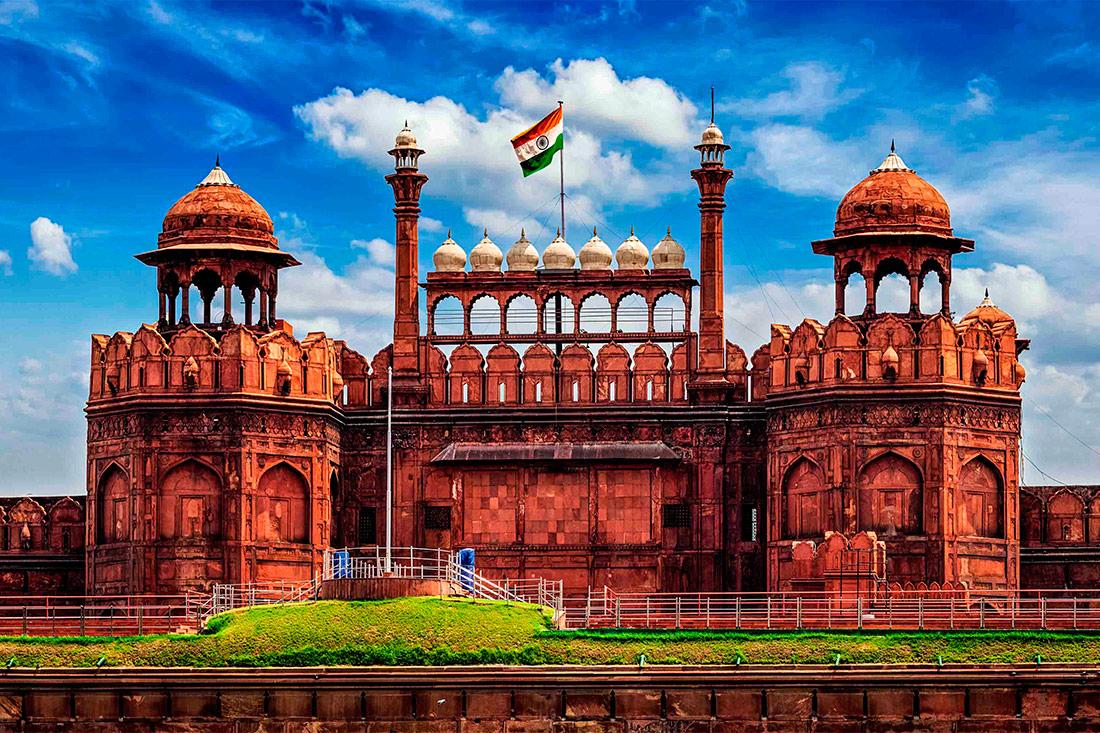
The palace got its name from the bright color of its walls. In the 17th century, life buzzed in the imperial court here, with magnificent halls hosting receptions, important meetings, and grand ceremonies. In the 18th century, the fortress had to fend off enemy attacks several times: part of the structures were destroyed, and the rulers' treasures were looted.
Today, several halls are open to tourists, including an interesting museum. Every evening, unusual laser shows are held, where many curious facts about the history of this place can be learned. A vast array of memorable souvenirs is for sale at the nearby Chhatta Chowk market.
Address: Red Fort, Netaji Subhash Marg, Lal Qila, Chandni Chowk, New Delhi, Delhi, India.
Qutub Minar - A Magnificent Temple Complex
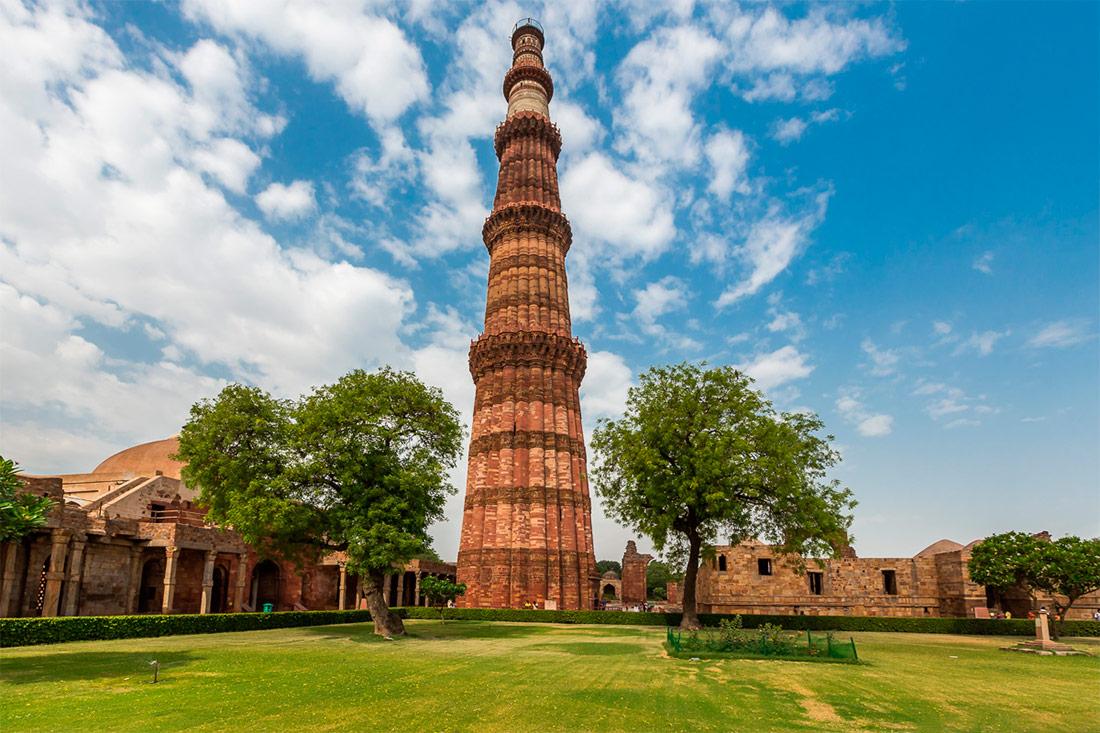
Construction of the complex began in the 12th century, and subsequently, each ruler who came to power continued the construction and added new structures to the ensemble. The main tower, Qutub Minar, was built over nearly two centuries, resulting in a grandiose five-story structure that stands 73 meters tall. At its base, the diameter of the tower is 15 meters, while at its highest point, it narrows to 2.5 meters. The stone spiral staircase inside consists of nearly 400 steps. The exterior walls are adorned with Islamic decorations and Arabic calligraphy.
In addition to the tower, there are remnants of other ancient structures in the complex. One of the most interesting is an iron pillar erected in 415 AD. Centuries have passed, yet the pillar resists corrosion and destruction. Visitors to Qutub Minar often bring nuts and seeds, as the area is inhabited by many curious squirrels.
Address: Qutub Minar, Seth Sarai, Mehrauli, New Delhi, Delhi, India.
Gurdwara Bangla Sahib - Majestic Sikh Temple
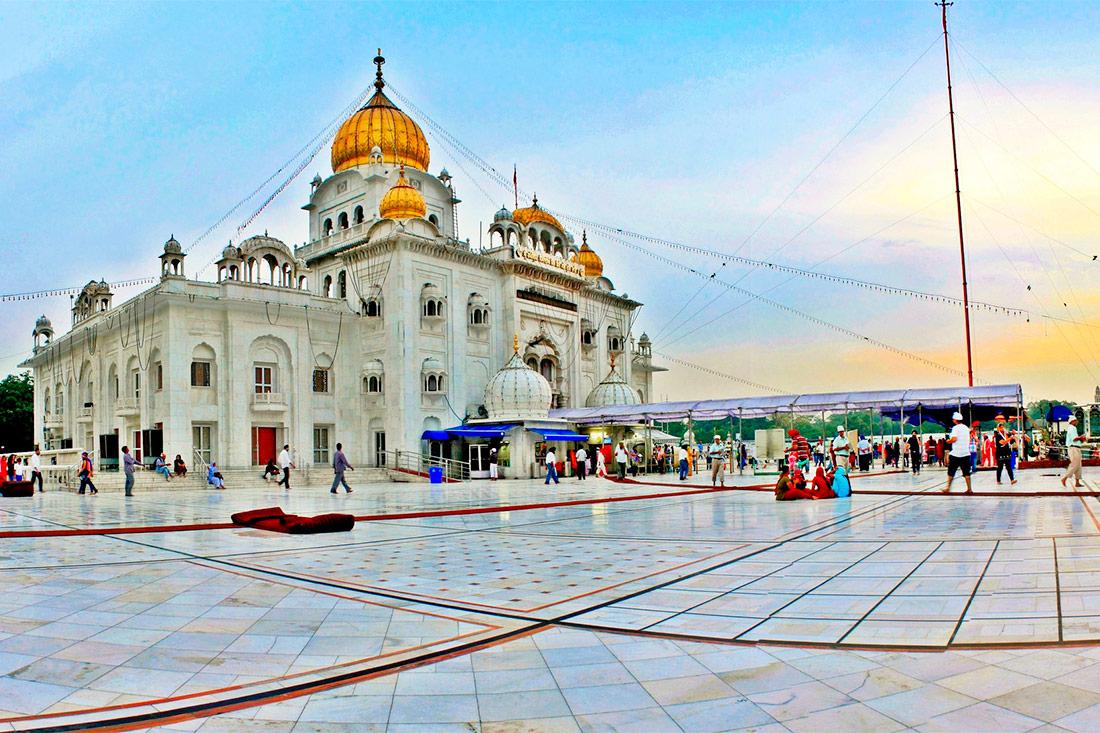
The history of the temple complex began in the late 18th century. The distinctive golden dome and high flagpole of the gurdwara are visible from a distance. Inside the complex is a large pond, the water of which is considered sacred.
The pond and temple are a pilgrimage site for Sikhs who come here from various countries. The complex also includes an intriguing gallery and museum area where many interesting exhibits can be seen.
Address: Gurdwara Bangla Sahib, Hanuman Road Area, Connaught Place, New Delhi, Delhi, India.
Best Tours in Delhi:
Lotus Temple - A Famous Religious Structure
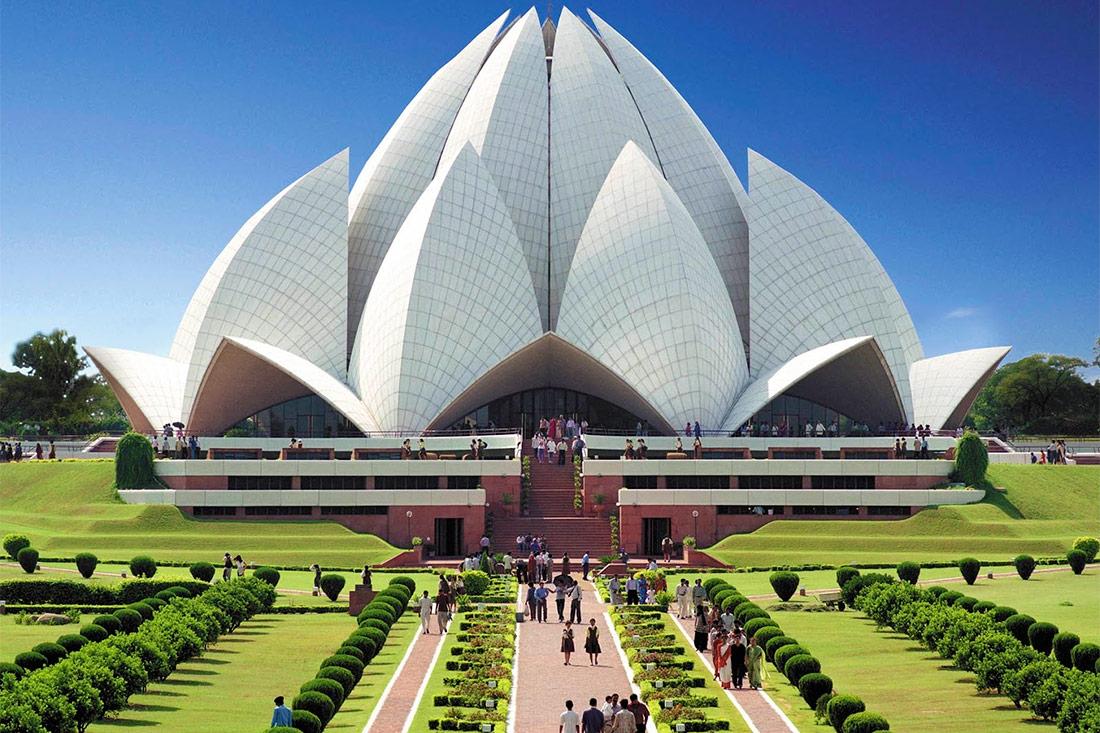
The temple was built in 1986 and has quickly become one of the main attractions of the city. People from different faiths can come here to pray, which highlights the unique essence of the Baha'i religion, whose followers built this site.
The symbols of the temple - white lotuses - grow in pools on the surrounding grounds. The architecture of the structure is devoid of extravagant details: no icons, altars, or sculptures. Yet it is in this external simplicity that its main charm lies. The only bright feature is the golden Baha'i emblem on the dome. Everyone who comes here feels true tranquility and harmony within.
Address: Lotus Temple, Lotus Temple Road, Bahapur, Shambhu Dayal Bagh, Kalkaji, New Delhi, Delhi, India.
India Gate - A National Memorial
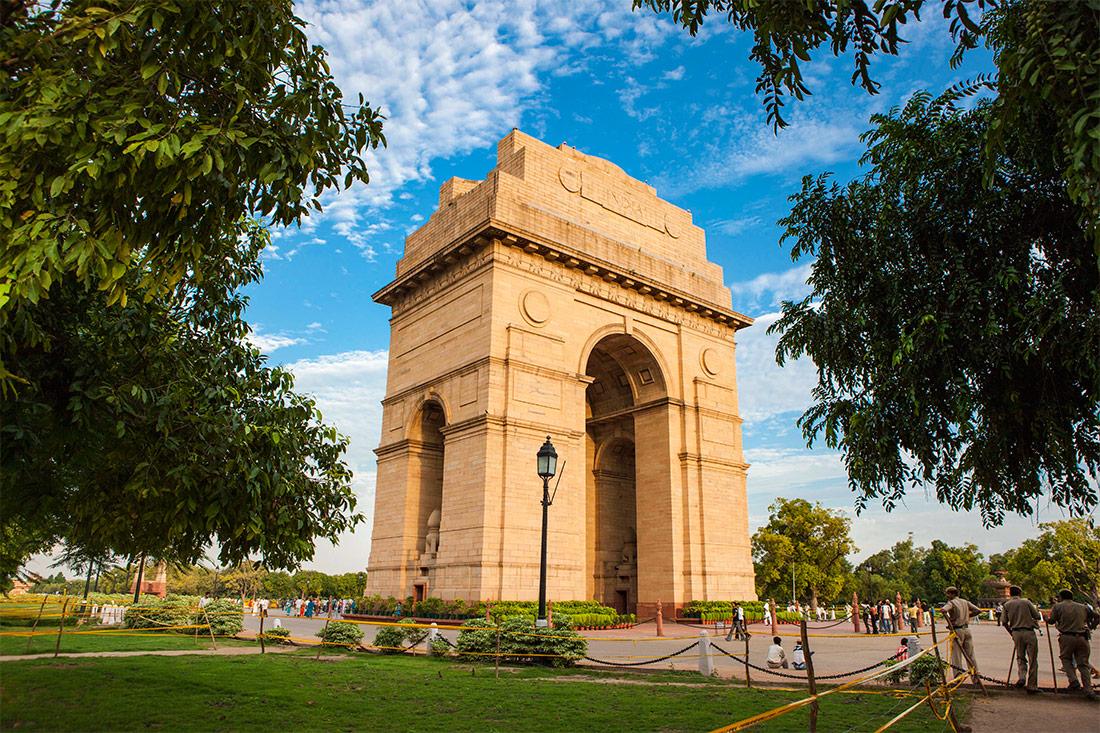
Various delegations frequently visit this grand memorial to lay flowers at the Eternal Flame in memory of soldiers who lost their lives in combat. The India Gate is a classic arch standing 42 meters high. The sandstone from which the memorial is made changes color depending on the time of day. Built in 1931, it has since become one of the main symbols of Delhi.
A small park surrounds India Gate, providing a lovely environment for family relaxation. In the evenings, it is illuminated, transforming the memorial: in the light of colored lamps, it appears to soar above the ground.
Address: India Gate, Rajpath, India Gate, New Delhi, Delhi, India.
Jama Masjid - The Most Popular Place in the City
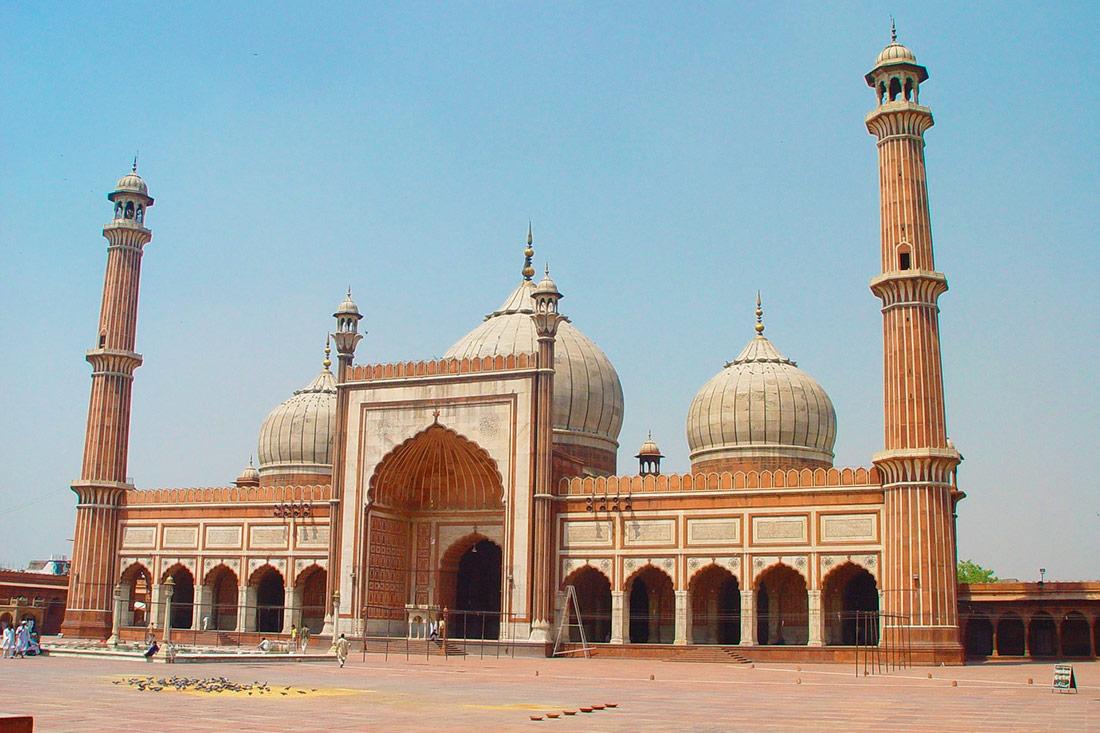
The mosque can accommodate 25,000 worshippers at once. The majestic structure is built on the highest point of a hill, adding to its grandeur. More than five thousand craftsmen worked on its construction, allowing visitors and residents to appreciate the beautiful design featuring high towers, white domes, and sandstone minarets.
The interior is adorned with white marble, featuring inscriptions made from black material. In the inner courtyard, there is a sacred pool for ritual ablutions.
Address: Jama Masjid, Jama Masjid Road, Jama Masjid, Chandni Chowk, Delhi, India.
Humayun's Tomb - A Medieval Mausoleum
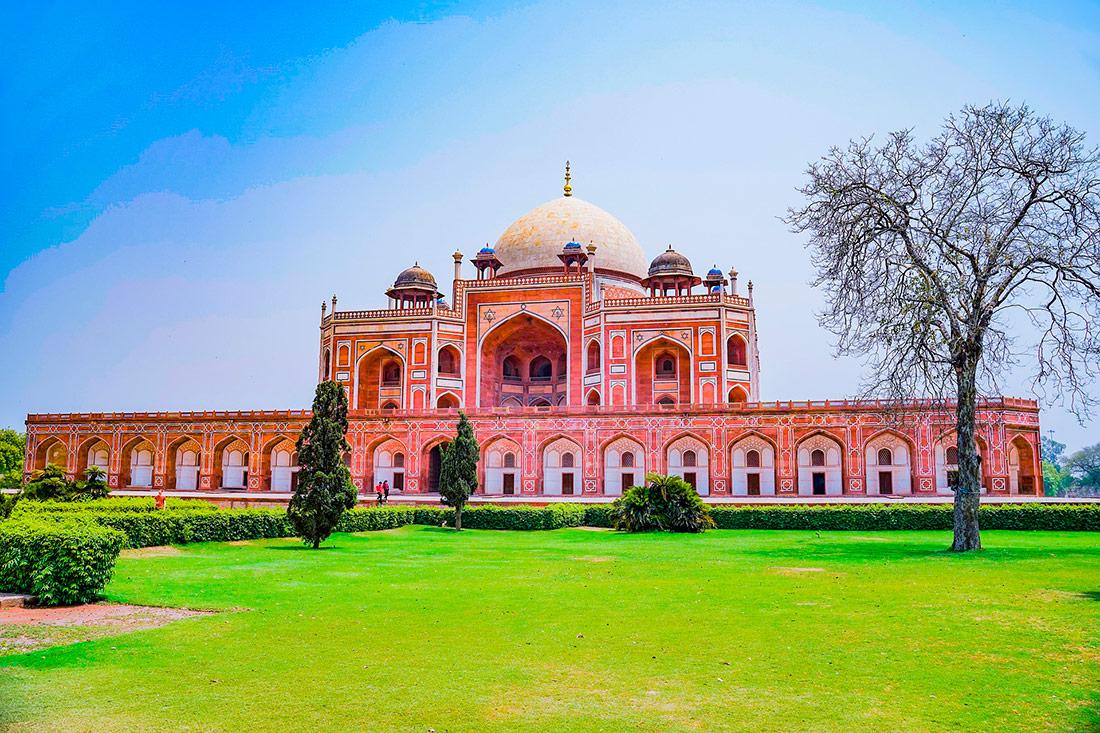
Humayun's Tomb belongs to the ancient Baburid dynasty. The large structure is adorned with numerous arches and inlays of black and white marble. The height of the central dome is 38 meters.
In the main hall, one can see the sarcophagi of Humayun, his family members, and close associates. Surrounding the mausoleum are beautiful gardens with wide alleys, abundant greenery, and footpaths. Travelers come here to admire the unusual architecture of the building, enter inside, and stroll around the grounds.
Address: Humayun's Tomb, Nizamuddin, Nizamuddin East, New Delhi, Delhi, India.
Akshardham Temple Complex - One of the Most Beautiful Temples in India
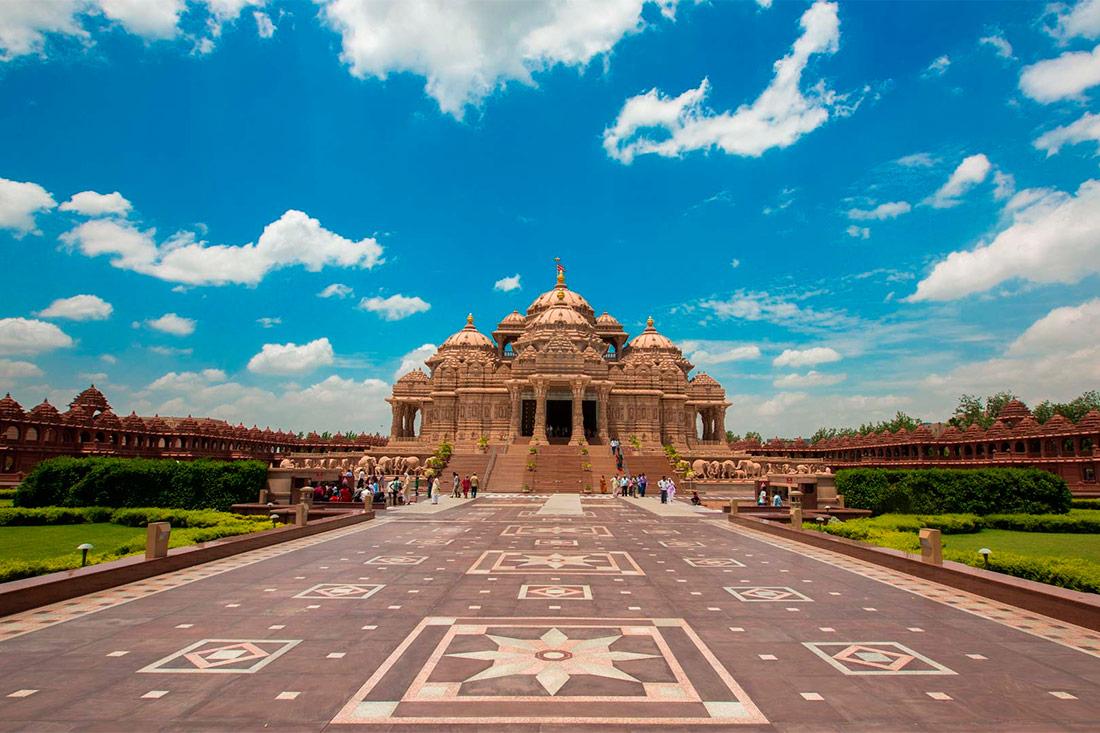
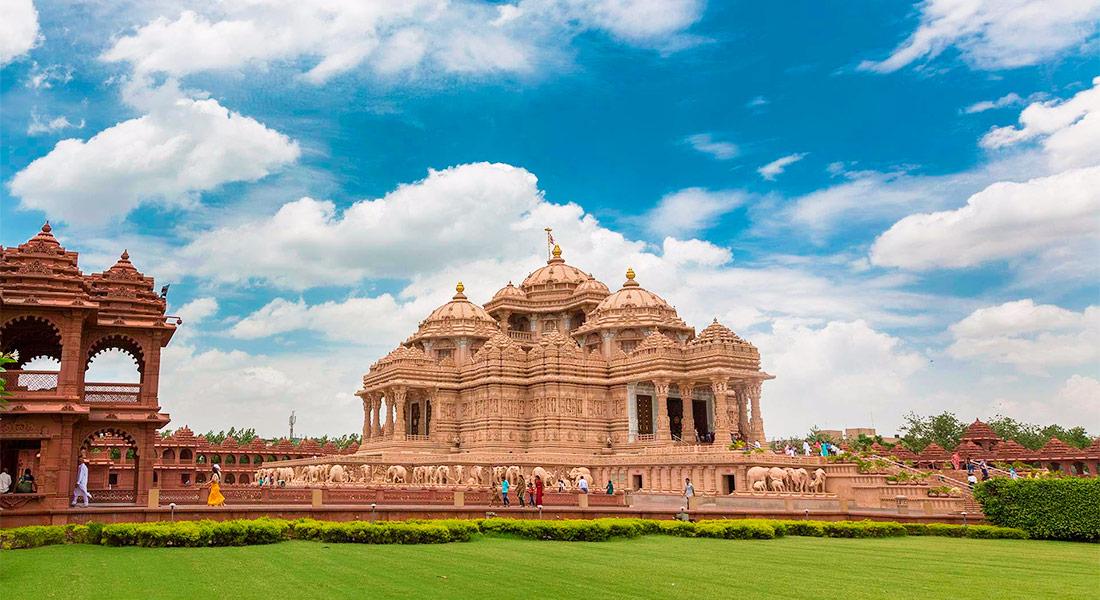
The temple complex is breathtaking at first sight and is a must-see in Delhi. Its vast grounds with parks, fountains, canals, and sculptural compositions are always filled with guests, but there is rarely a crowd due to the expansive area (the total area of the complex is 12 hectares).
The complex was recently opened in 2005. The centerpiece is a tall 42-meter temple with intricately carved walls. The external arches are supported by over two hundred columns.
Constructed entirely of unique pink marble on the outside, the interior is adorned with white marble. Three sides of the structure are surrounded by an artificial pond that receives water from all Indian rivers. In the evenings, the area is illuminated, and light and sound fountains come to life. For its splendid design and unique execution, the temple was entered into the Guinness Book of Records.
Address: Akshardham Temple, Unnamed Road, Yamuna Bank, New Delhi, Delhi, India.
Interesting Tours in Delhi:
Purana Qila (Old Fort)
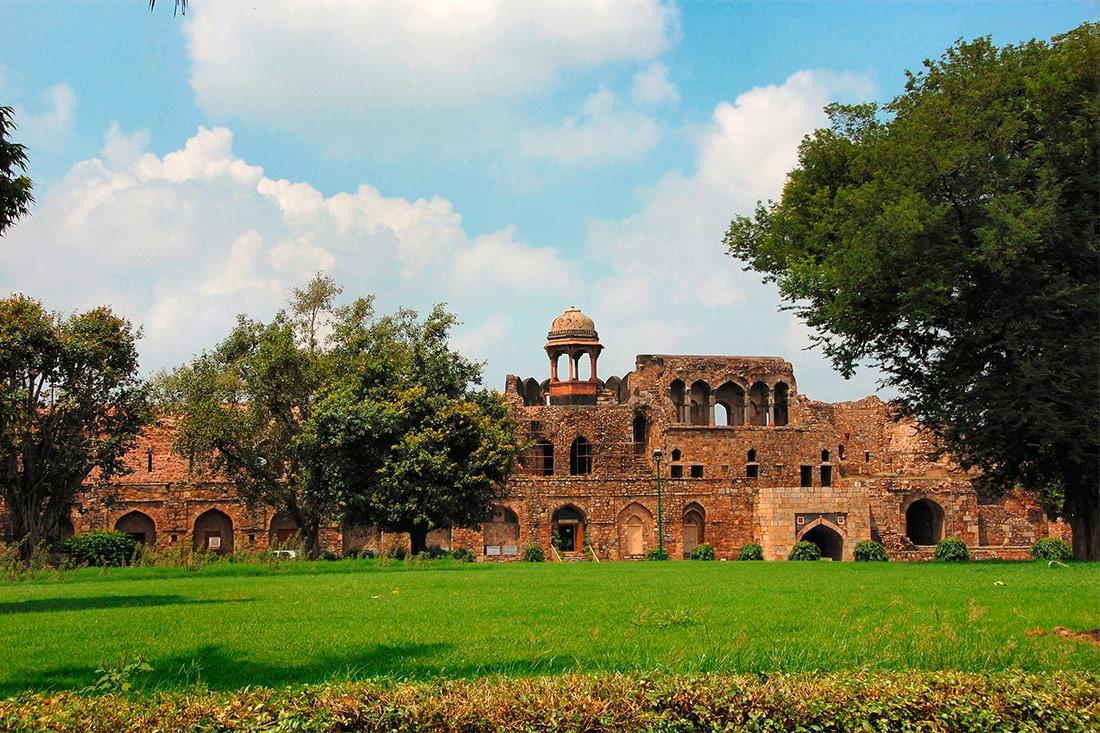
The ancient fortress was built in the 16th century and has remained in quite good condition. The walls stretch for 1.5 kilometers, with heights reaching up to 18 meters in some places. You can enter the fort through one of three gates, each made of sandstone. The semicircular towers at the gates are adorned with white marble, blue ceramic tiles, and intricate balconies and pavilions on narrow columns.
Only two mosques remain inside, but they hold great interest for tourists. In the evenings, an exciting show begins: performances recount the most significant events in Delhi's history.
Address: Purana Qila, Pragati Maidan, New Delhi, Delhi, India.
Rashtrapati Bhavan - Presidential Palace
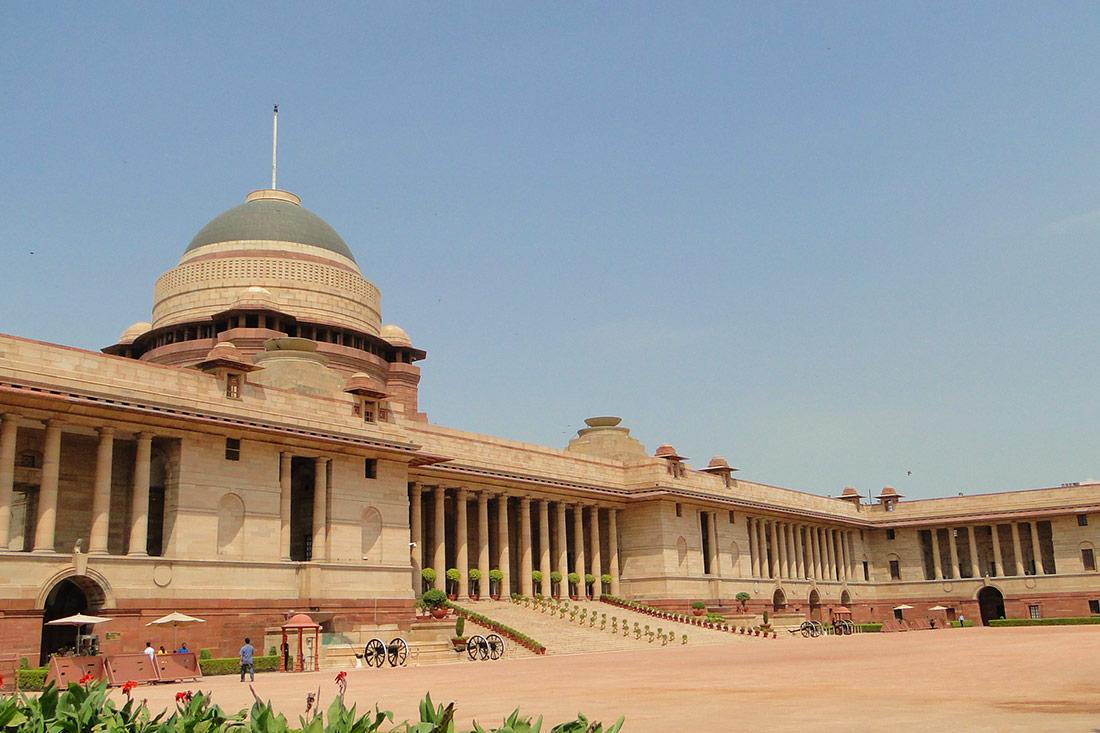
The presidential palace has about 340 rooms, with a total area of 19,000 square meters. The design combines several architectural styles, giving it a unique charm. In 2014, a museum was opened in the palace, focusing on the lives of the country's presidents.
The exhibits display art pieces and guided tours of the luxurious interiors. The palace's grounds include a delightful landscaped park, open to visitors only once a year during the annual festival (in February-March). Various spaces are accessible, each with its own special feature.
Address: Presidential Palace, Rashtrapati Bhawan, President's Estate, New Delhi, Delhi, India.
Indira Gandhi Memorial Museum - A Complex Surrounded by Blooming Gardens
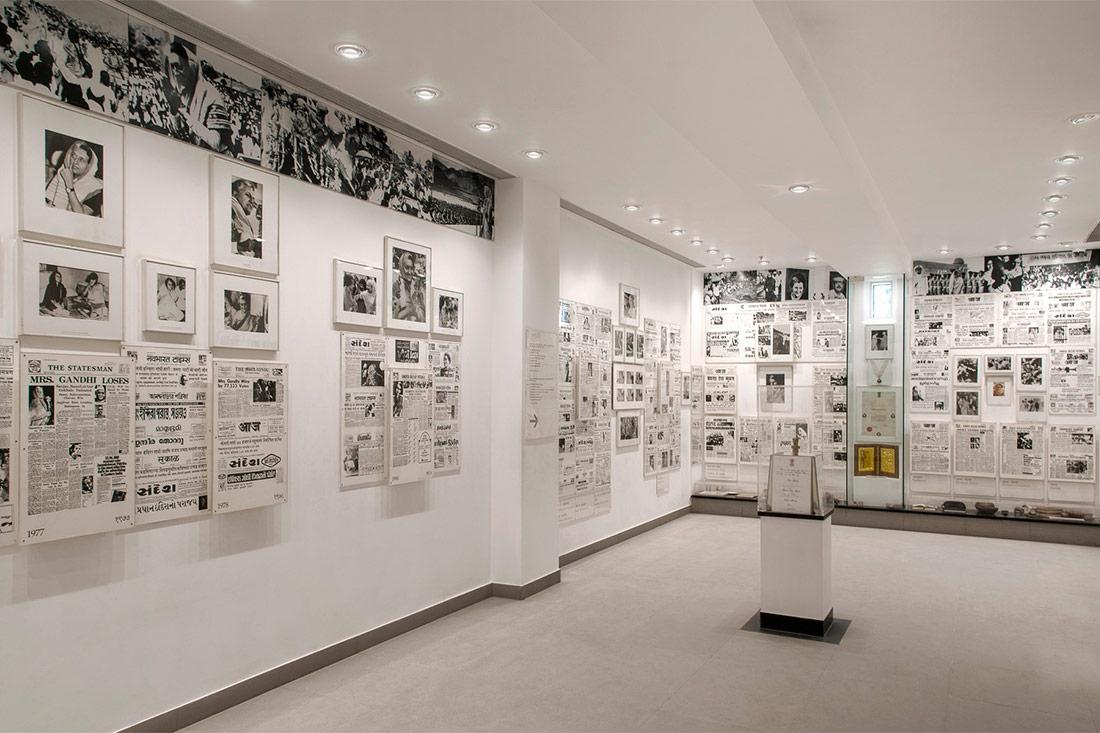
The exhibition is completely dedicated to Indira Gandhi, who governed the country for 20 years until she was assassinated by her own bodyguard. The display consists of numerous photographs, clothing items, letters, and documents.
Most of the rooms remain as they were during Gandhi's life. On the museum grounds, one area is marked by a glass slab - this is where Indira Gandhi was assassinated. The glass symbolizes the purity of the leader's soul and thoughts.
Address: Indira Gandhi Memorial Museum, Safdarjung Road, Near Delhi Gymkhana Club, New Delhi, Delhi, India.
Jantar Mantar - Ancient Observatory
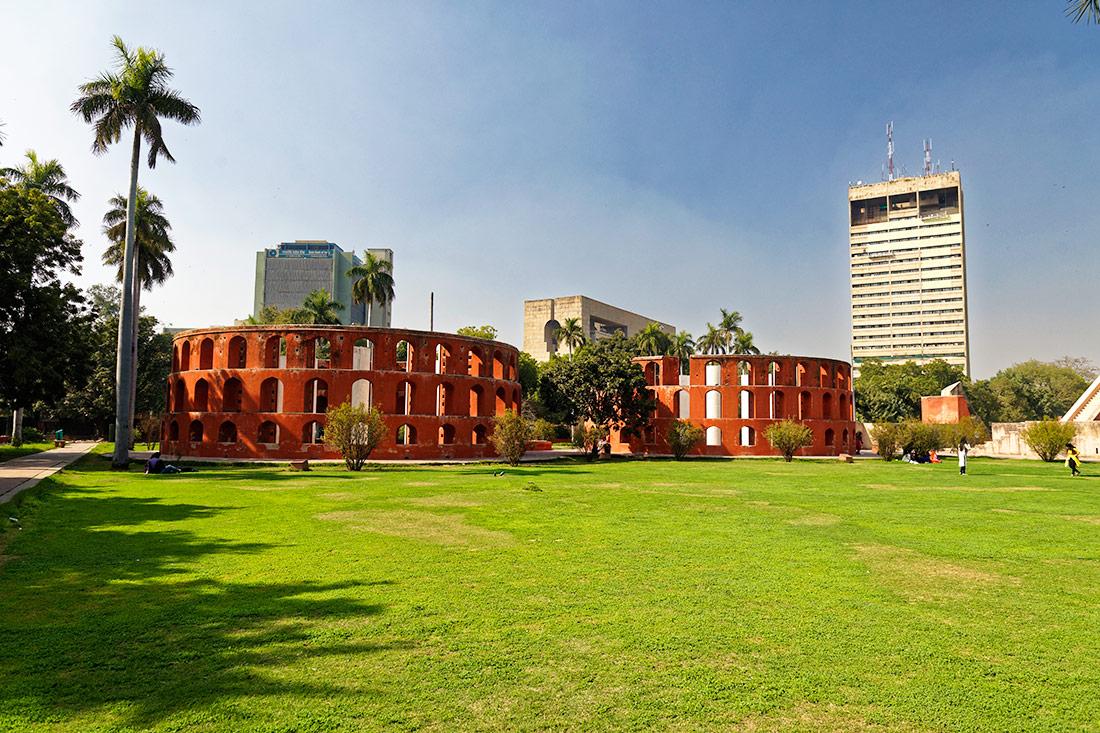
The observatory was built in the 18th century to observe celestial bodies, compose astronomical tables, and predict time and the movements of the Sun, Moon, and various planets. Tourists are intrigued by the ancient unusual instruments and devices. Many accurate calendars and valuable astronomical information were derived from the observatory's data.
Address: Jantar Mantar, Sansad Marg, Janpath, Connaught Place, New Delhi, Delhi, India.
National Museum of New Delhi - The Largest Museum in India
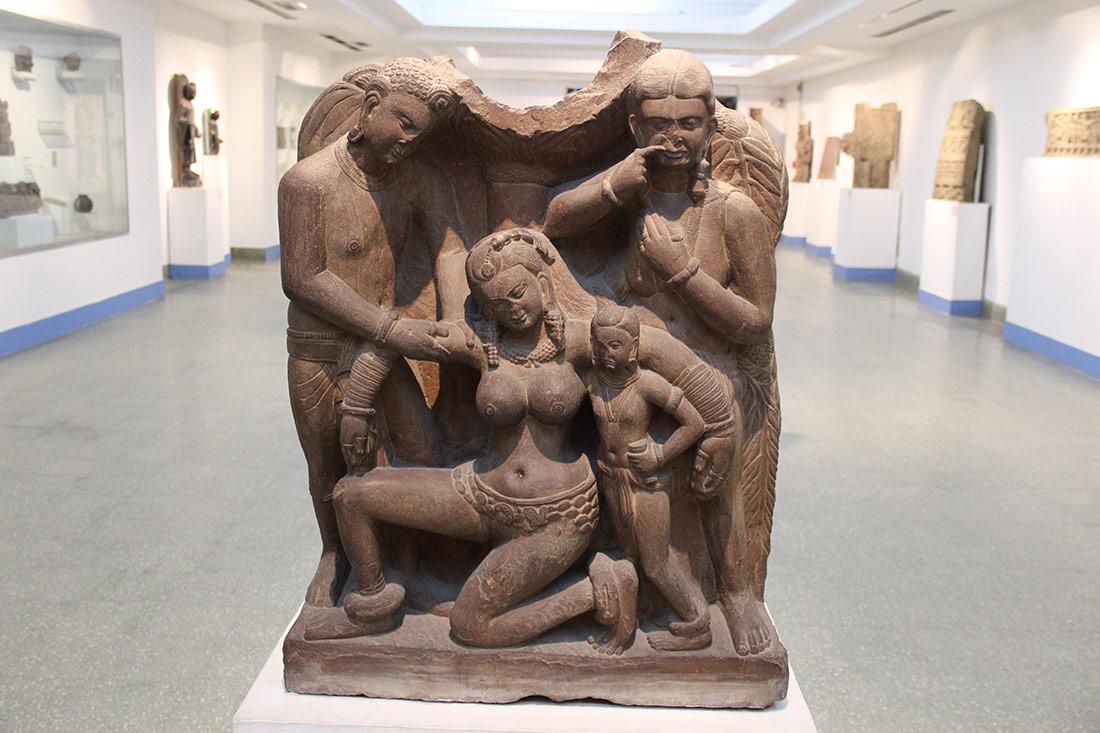
The largest museum in India houses a vast collection of artifacts, relics, archaeological finds, and art objects. Rooms showcase weapons, jewelry, armor, paintings, manuscripts, and decorative arts.
Many exhibits date back to the 2nd to 4th millennia BC (including Neolithic tools and primitive jewelry). The museum attracts more than 7 million visitors annually.
Address: National Museum, Janpath Road, Rajpath Area, Central Secretariat, New Delhi, Delhi, India.
Laxminarayan Temple - A Cult Site in Honor of the Goddess of Happiness and Abundance
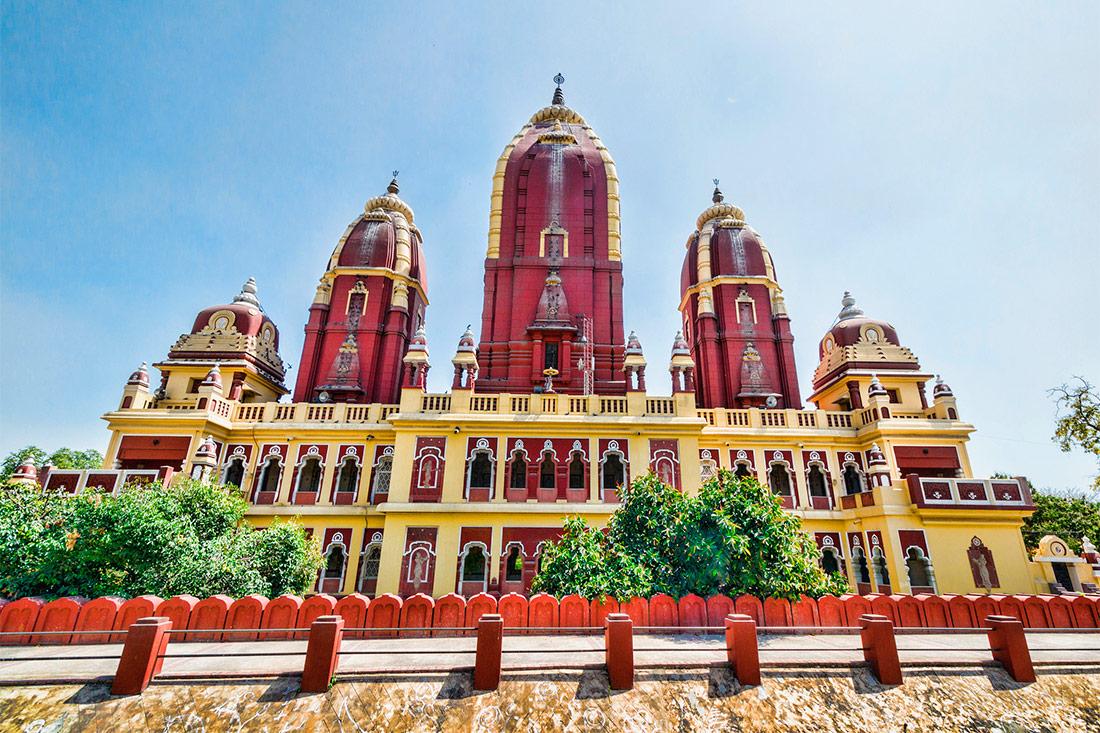
One of the most vibrant attractions in the Indian capital welcomes thousands of tourists and pilgrims daily. The temple's main feature is its unique stone carvings, crafted by the finest sculptors. Built from white-pink marble, the temple sparkles with colors and gold plating.
The main dome stands 48 meters tall. The central sanctuary is dedicated to Laxmi, the goddess of happiness and prosperity. On other levels, worshippers can pay homage to Buddha, Shiva, Ganesha, and other deities. The Krishna sanctuary, decorated with mirrors and colorful semi-precious stones, deserves special attention.
Address: Shri Lakshmi Narayan Temple, Mandir Marg, Near Gole Market, New Delhi, Delhi, India.
Delhi Zoo - A Celebration of Wildlife

The main idea followed by the zoo's creators was to place wild animals not in cages but in natural enclosures surrounded by rocks, trees, and water bodies. The grounds are adorned with lush vegetation and artificial lakes: there is a marked route on the wide trail for easy navigation.
Animals from all over the globe inhabit the zoo. Highlights include elephants, giraffes, monkeys, representatives of the cat family, reptiles, and ungulates. The total number of animals reaches 2,500. The zoo's primary priority is to preserve endangered species.
Address: National Zoological Park, Mathura Road, New Delhi, Delhi, India.
Delhi Craft Museum - A Unique Collection of Antiquities
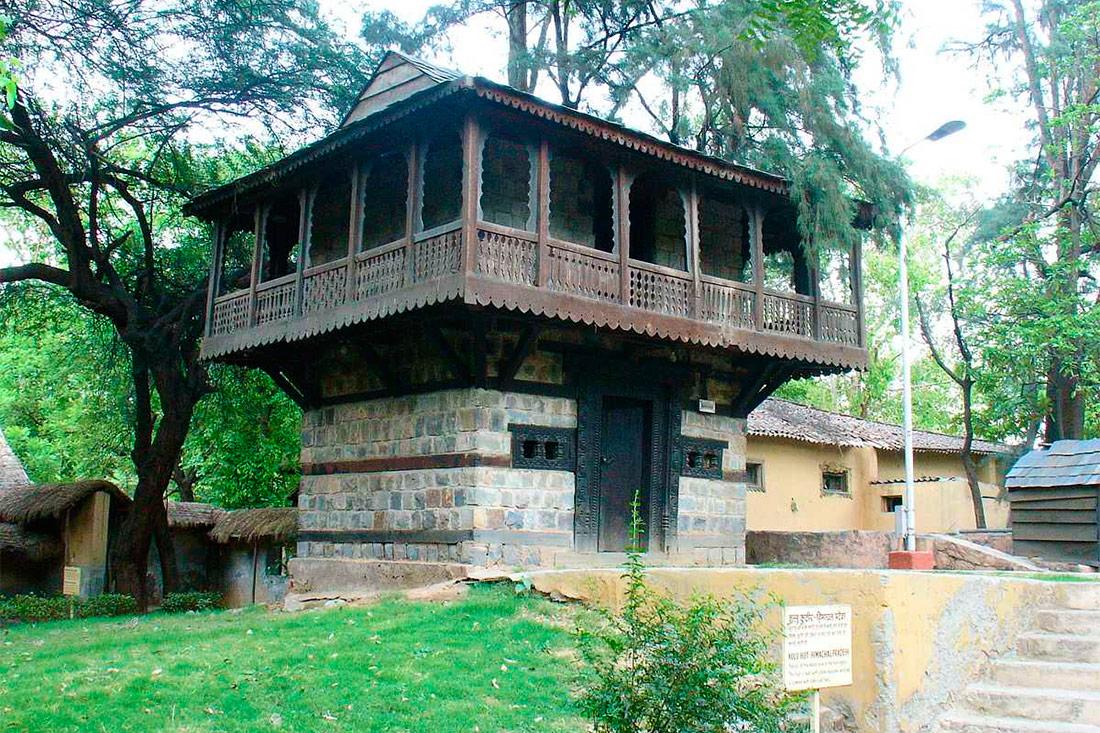
The largest museum in the city was established over 30 years ago. Its main purpose is to preserve India's national culture and folk craft styles. Today, the archives hold more than 20,000 works done in traditional styles from various regions of the country.
The complex includes exhibition galleries, a photo laboratory, a research center, an archive, and workshops. There is even a small village within the museum, featuring colorful traditional houses and temples, with walls painted by talented artists.
Address: National Handicrafts and Handlooms Museum, Pragati Maidan Bhairon Marg, Pragati Maidan, New Delhi, Delhi, India.
National Railway Museum
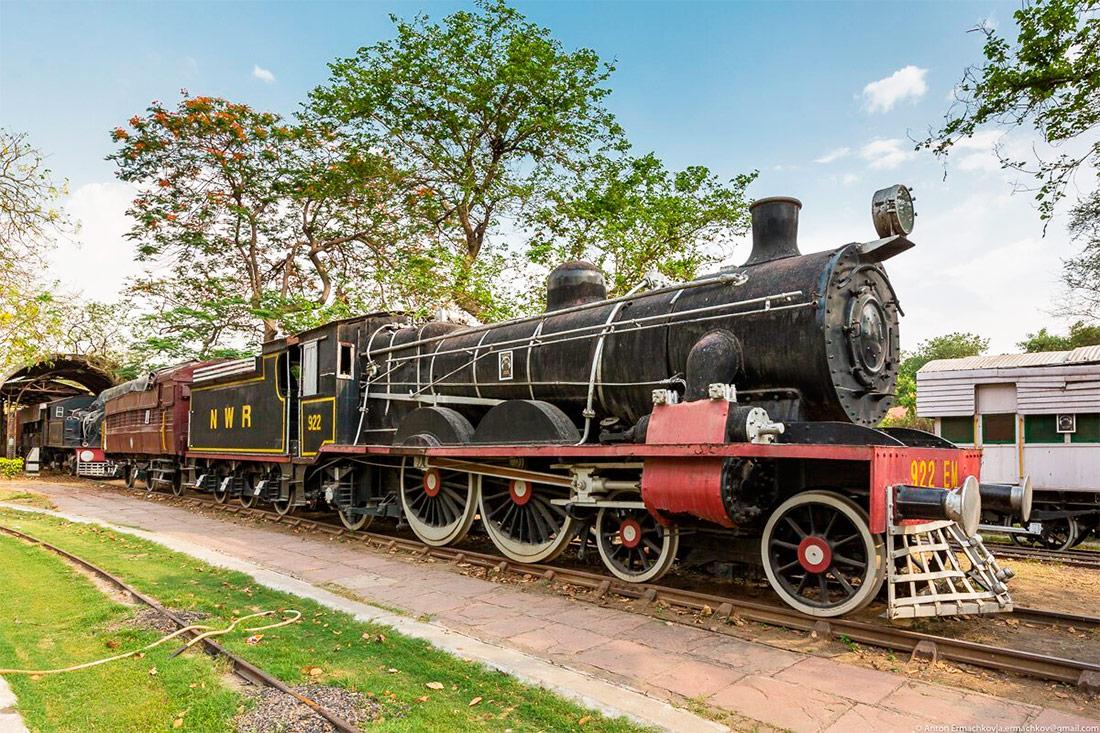
Railroads are extremely popular in India, making them one of the most demanded means of transportation. In terms of length of tracks, India ranks 4th in the world. The unique museum is located in a former depot building, appealing to both adults and children. The key feature is that all exhibits can be touched, opened, buttons pressed, and levers pulled.
Exhibits showcase models and photographs of trains from different eras. Here, you can even see the original of one of the first locomotives built in the 18th century and still in working condition.
One of the cars once transported an English prince, and today anyone can visit it. The carriage is lined with pristine white leather. The museum also features various exhibits dedicated to the history of railroads in India, intriguing railroad-themed items, and even an elephant skull hit by a train. Surprisingly, even the urns in the museum are shaped like train cars.
Address: National Railway Museum, Chanakyapuri, New Delhi, Delhi, India.
Hauz Khas Village - An Architectural Historical Complex
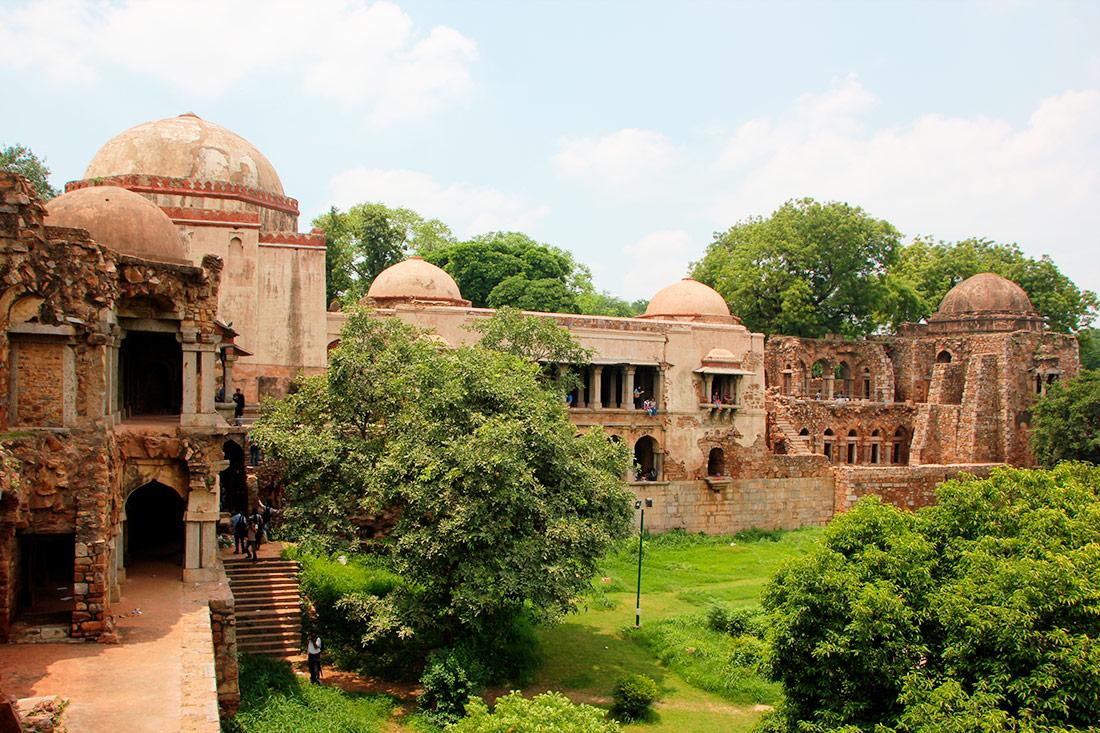
Hauz Khas Village is part of the medieval city. It includes an unusual tank, ancient mosques, tombs, and pavilions. In the 14th-16th centuries, this area was often the burial ground for members of Muslim royal dynasties, evidenced by numerous mausoleums and tombs.
Today, this area is considered a center of elite commercial property. Expensive hotels, trendy art galleries, luxurious boutiques, and restaurants open their doors to guests, surrounded by well-kept parklands ideal for daytime or evening strolls.
Address: Hauz Khas, New Delhi, Delhi, India.
Gandhi Smriti Museum - A Memory of the Spiritual Leader of the Indian People
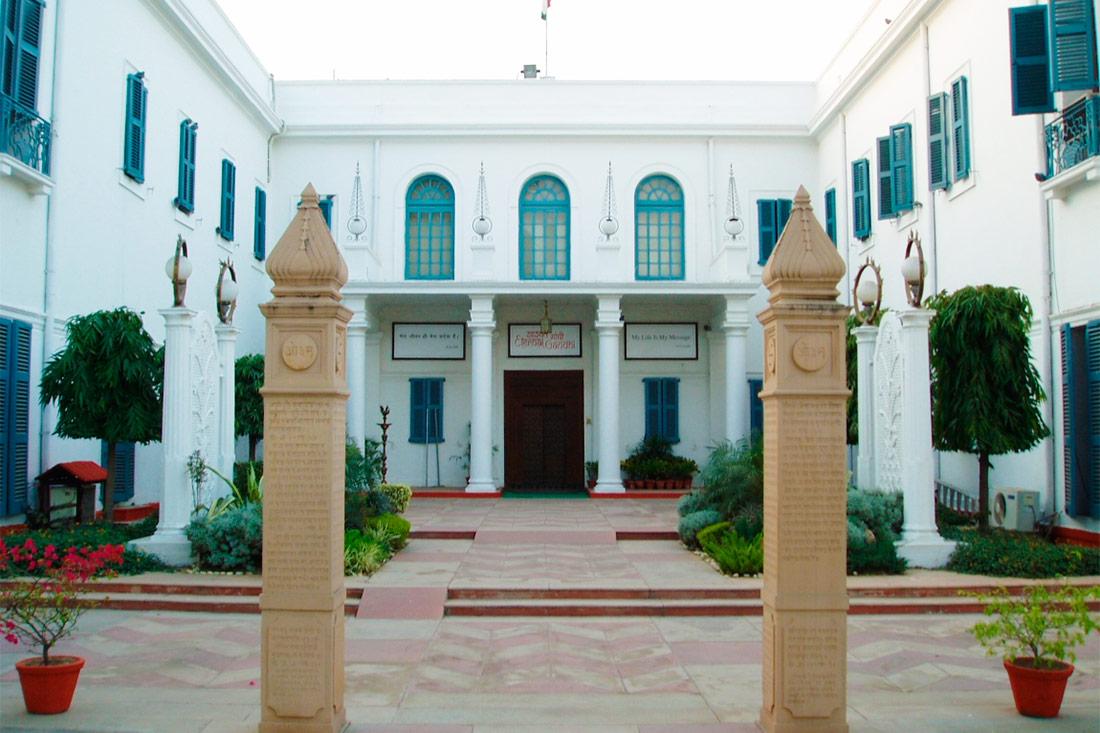
The Gandhi Smriti Museum is located in the house where the political leader once lived. It was here that his life came to an end in 1948. The memorial complex has gathered photographs, personal belongings, and philosophical writings, allowing an insight into the rich and complex life of this spiritual leader. The museum staff have endeavored to recreate the atmosphere and setting that existed during Gandhi's time.
Address: National Gandhi Museum and Library, Vikram Nagar, New Delhi, Delhi, India.
National Gallery of Modern Art
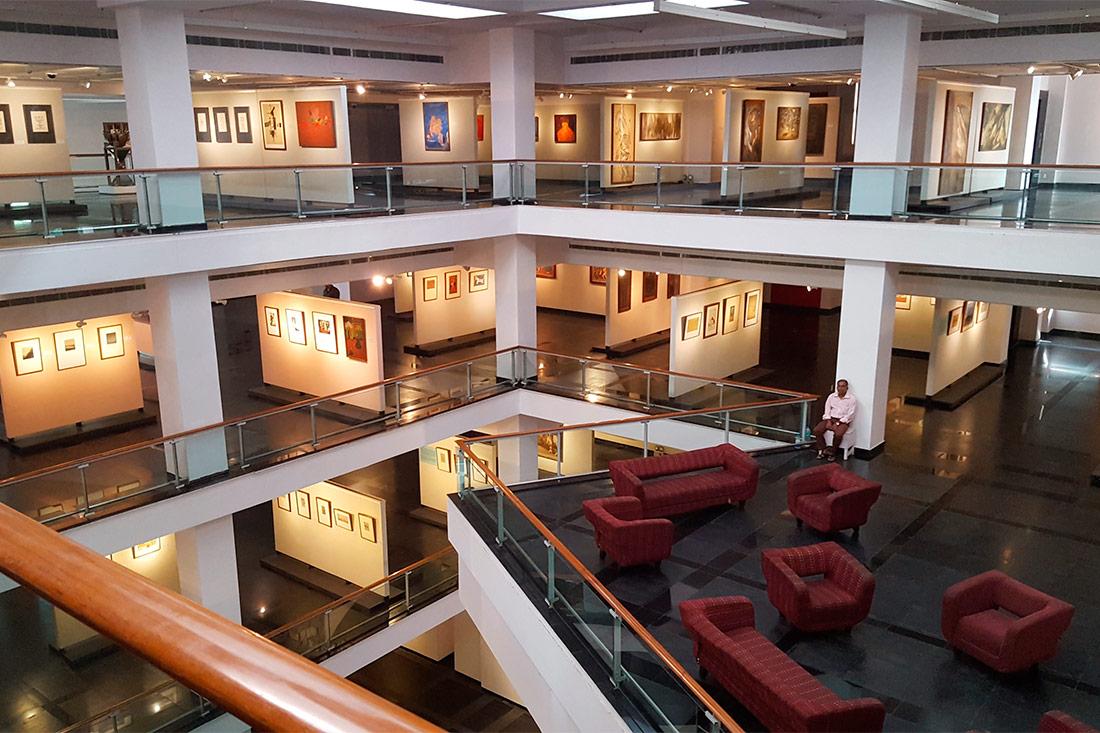
A wonderful opportunity to get closer to modern Indian art. The National Gallery features numerous works dating back to the 20th and 21st centuries. Each exhibit is characterized by uniqueness and originality, with all displays imbued with the spirit of expression and unlimited freedom.
The building that houses the museum is also notable. It's an old palace adorned with paintings, carvings, and beautiful ornaments. Another part of the exhibition, a sculpture display, is located on the platform before the entrance.
Address: National Gallery of Modern Art, New Delhi, Delhi, India.
Salimgarh Fort - A Famous Fortress
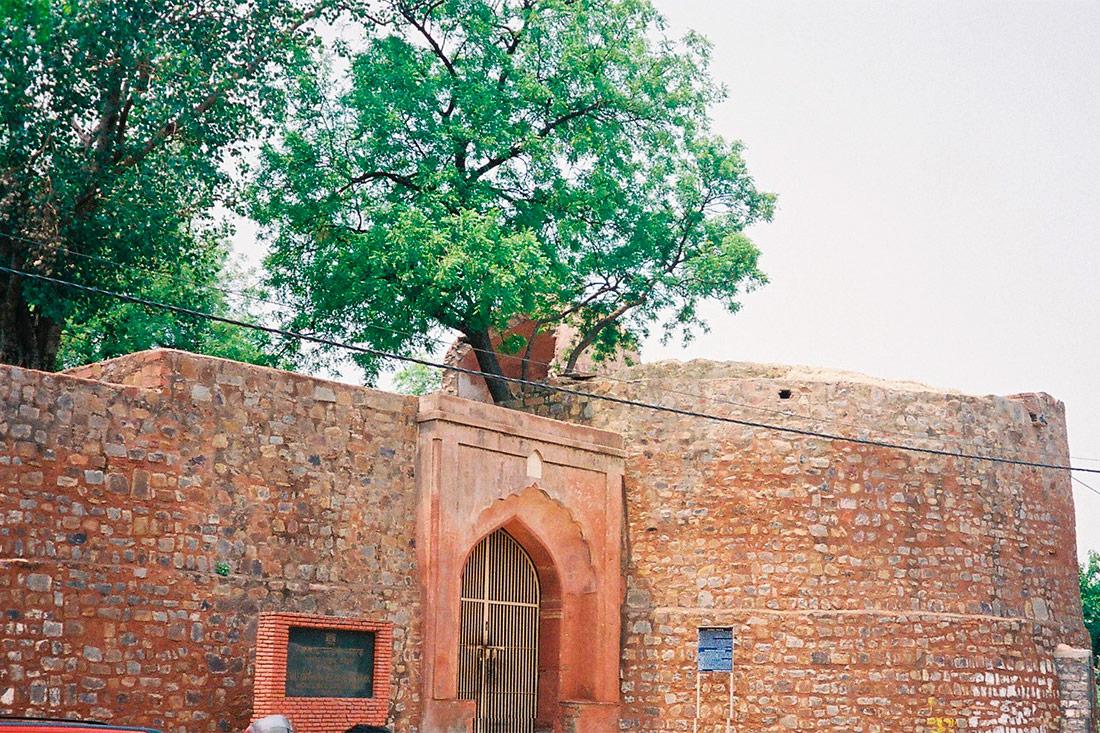
The fort was built in the 16th century, and to this day, the walls and most of the structures have remained intact. For several centuries, the fort housed a prison. Today, it is part of a vast complex and included in UNESCO's World Heritage Sites. Tourists come here to see the magnificent structure, appreciate the scale of the construction, and imagine how Mughal emperors lived within its walls.
Address: Salim Garh Fort, Salimgarh, Chandni Chowk, New Delhi, Delhi, India.
Chandni Chowk - A Colorful Eastern Bazaar
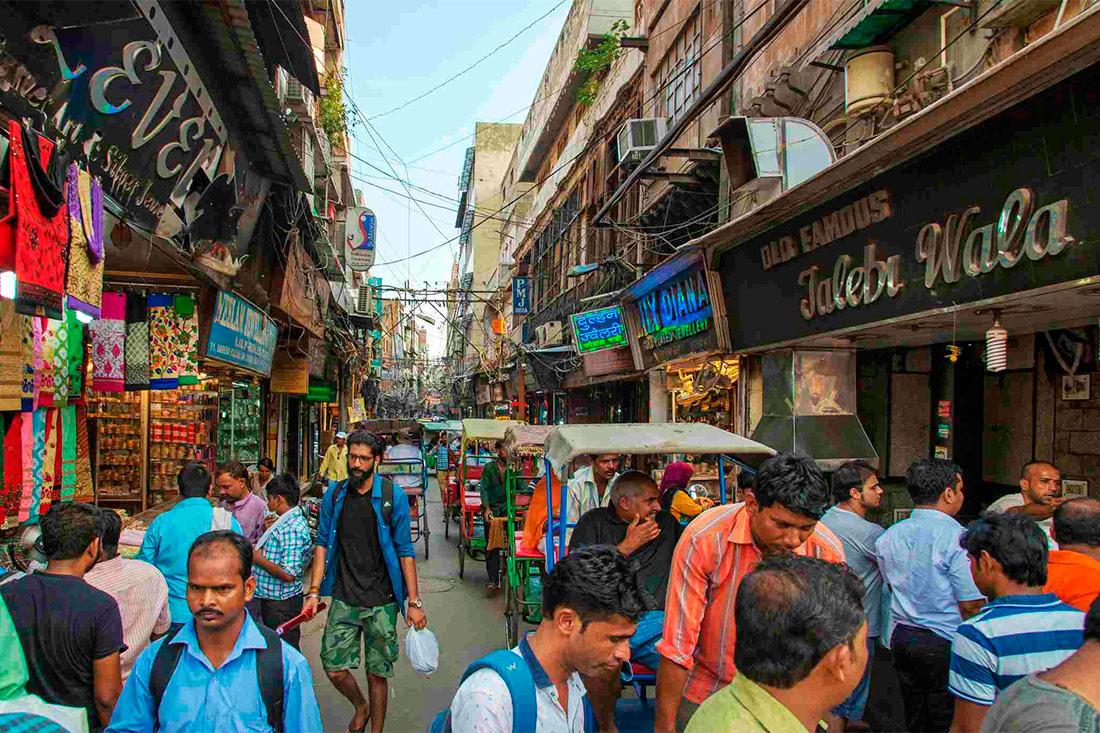
The atmosphere is always bustling and noisy here: sellers haggle with buyers, food vendors offer a variety of treats, and cycle rickshaws seek passengers. Life at the largest market in Delhi is constantly vibrant. The market is divided into themed quarters to make navigation easier.
Here, you can buy absolutely everything: clothing, footwear, souvenirs, paintings, dishes, and spices. Tourists also note that Chandni Chowk is where the tastiest street food can be found. The market's name translates to 'Moonlight Street': once upon a time, a canal ran through it, reflecting the moon's light at night.
Address: Chandni Chowk Market, Nai Sarak, Raghu Ganj, Roshanpura, Old Delhi, New Delhi, Delhi, India.
Raj Ghat - A Memorial Park
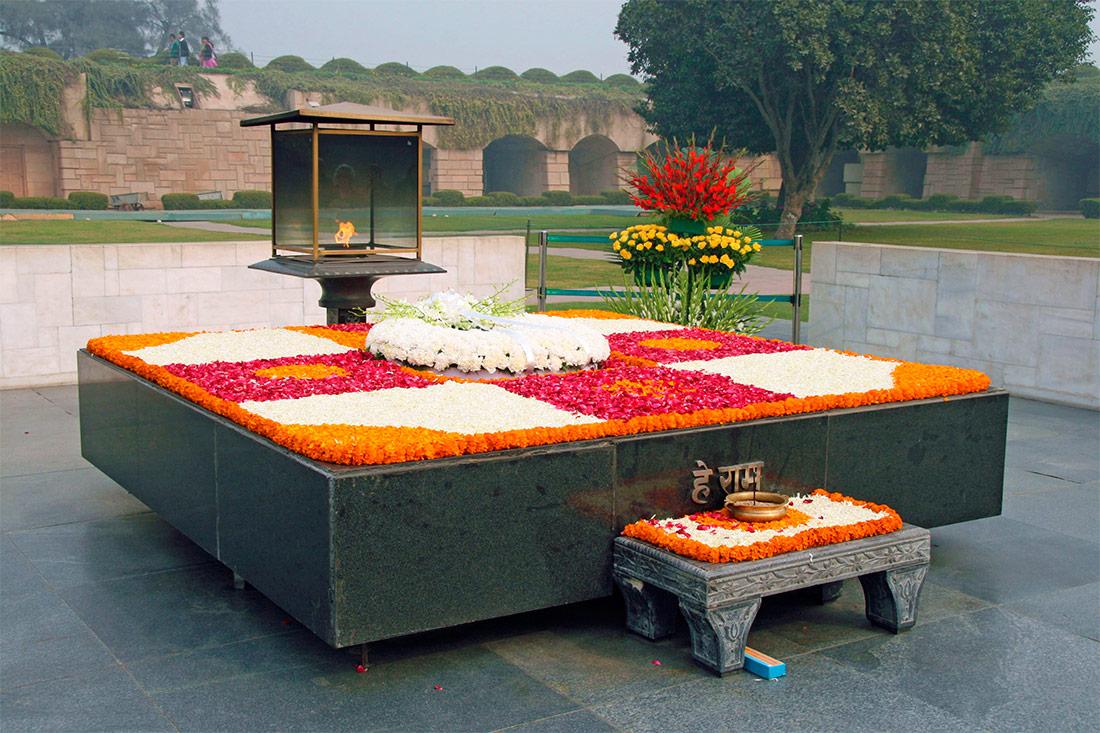
Raj Ghat is a symbolic place for every resident of Delhi. Those who have been cremated here include some of the most respected individuals in India: Indira Gandhi, Mahatma Gandhi, and Rajiv Gandhi. The memorial complex is adjacent to the Yamuna River, with steps leading up from the bank, built several centuries ago. On the steps, people prayed, did laundry, and conducted cremation rituals.
Raj Ghat features a cozy garden, well tended with lawns, flower beds, and beautiful shrubs and trees. The site where Mahatma Gandhi was cremated is marked with a black plinth.
Address: Raj Ghat, Gandhi Smriti, Raj Ghat, New Delhi, Delhi, India.
Tughlaqabad Fort - Ruins of an Ancient Defensive Structure
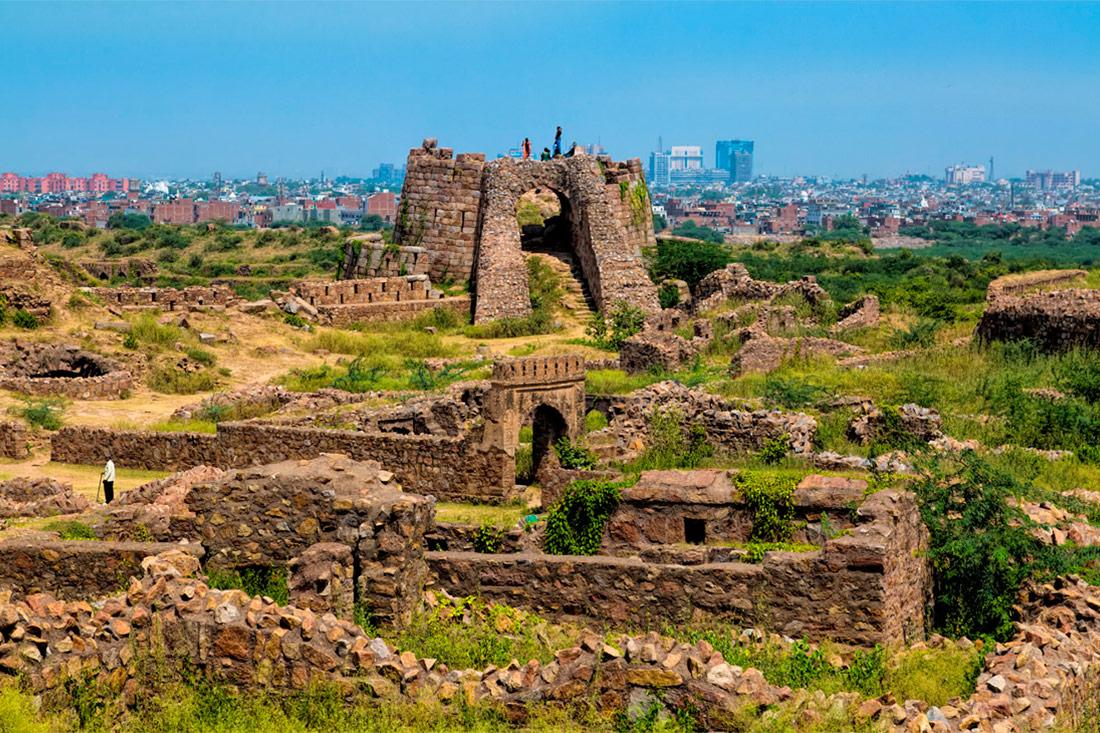
Tughlaqabad Fort was built in the early 14th century, but just a few years after construction, it was abandoned after its founder was killed in battle. Externally, the structure resembles a massive stone fort of irregular shape that was meant to encircle a city. The sloping walls are filled with stones, and defensive fortifications are located at intervals with round bastions.
Of the 52 gates, only 13 remain. Dense thickets prevent a full inspection of the fort's main areas, but some sections are occupied by modern buildings and are accessible to tourists.
Address: Tughlaqabad Fort, Tughlaqabad, New Delhi, Delhi, India.
Safdarjung's Tomb - A Magnificent Marble Mausoleum
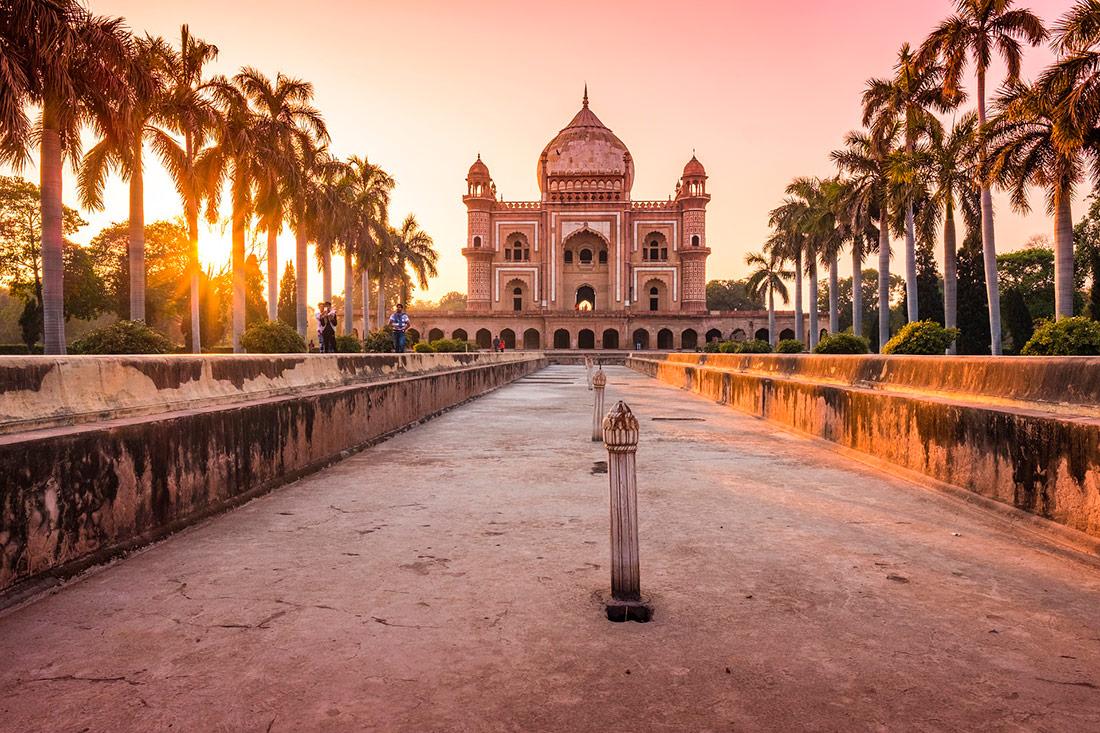
The marble mausoleum is the burial site of the Prime Minister of the Mughal Emperor, Safdarjung. The tomb is constructed in the best traditions of Mughal architecture, featuring golden domes, high towers, columns, and arched windows. The facade is embellished with intricate ornaments. Built in the mid-18th century, the tomb has been well preserved to this day. Beautiful gardens with wide alleys were created around the mausoleum. Tourists stroll through the surroundings, take photos, and marvel at this ancient architectural site.
Address: Safdarjung's Tomb, Airforce Golf Course, Delhi Race Club, New Delhi, Delhi, India.
Lodi Gardens - An Amazing Conservation Area
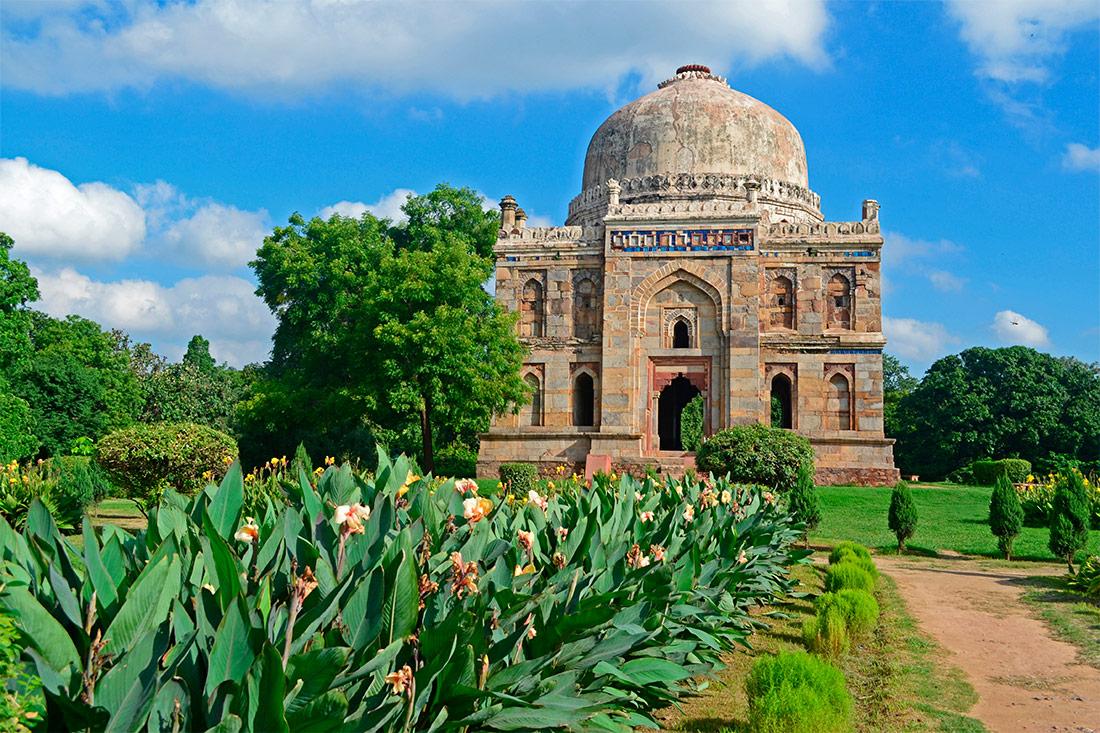
Once a neglected wasteland, a park was created there in 1936 by the wife of the King of India, transforming bare stones into a true oasis within a few years.
The vast garden complex is always filled with visitors. It attracts tourists, local residents with children, retirees, and athletes alike - providing good conditions for everyone. You often see people practicing yoga in the open air. The area is home to many exotic plants and rare tropical birds, while golden fish swim in the lakes. Many visitors relax on the lawns, enjoying small picnics away from city bustle.
While strolling through the garden, you can peek into a small butterfly sanctuary and the Bonsai park, featuring miniature plants. Within the Lodi Gardens sit several ancient tombs where rulers of the Lodi dynasty are buried.
Address: Lodhi Garden, Lodhi Road, Lodhi Gardens, Lodhi Estate, New Delhi, Delhi, India.
Sansad Bhavan - The Parliament Building of India
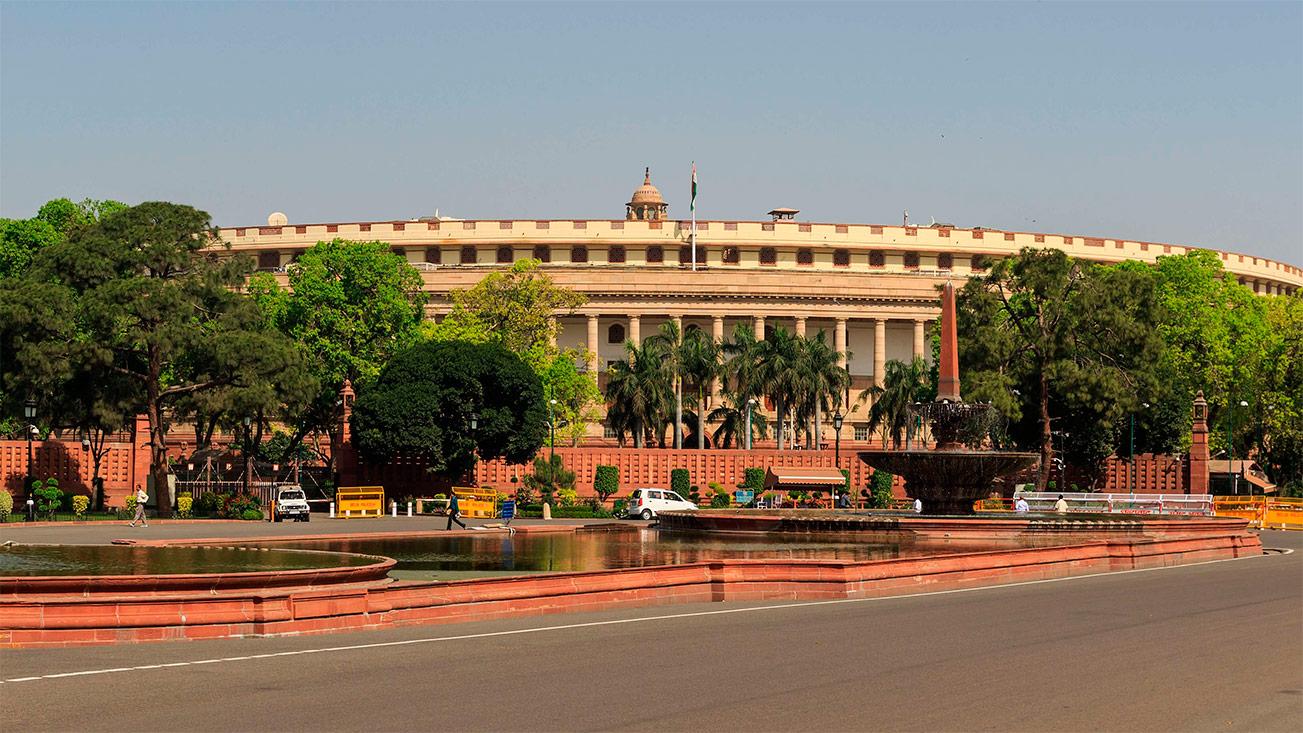
The parliamentary building was officially opened in 1927. The structure is circular, reflecting one of India's main symbols. The roof of the outer ring is supported by 144 massive columns. The dome, with a diameter of 30 meters, is considered one of the most impressive globally.
Surrounding the palace is a lush garden, and a tall fence made of aesthetic sandstone encloses it. In separate halls meet the Supreme Court of India, the Central Legislative Assembly, the State Council, and the House of Princes. The building is constantly bustling with tourists; every traveler visiting Delhi wants to see one of the city's main attractions.
Address: Sansad Bhavan, Sansad Marg, Gokul Nagar, Janpath, Connaught Place, New Delhi, Delhi, India.
Worlds of Wonder Amusement Park
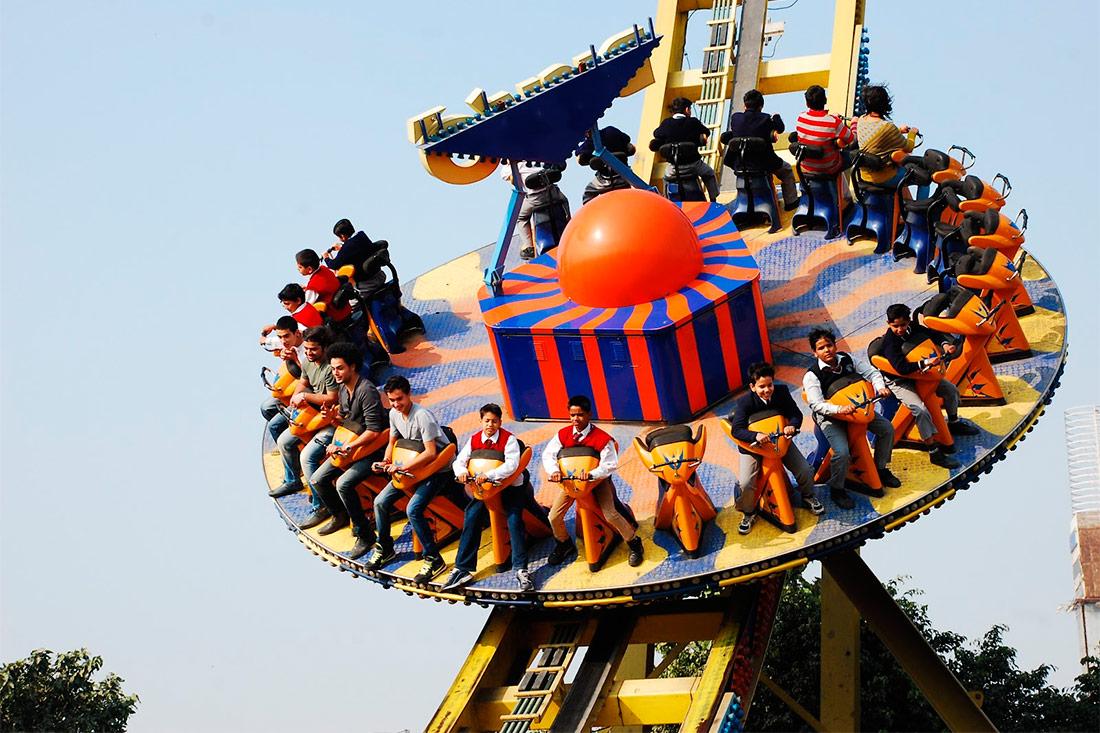
The modern amusement park offers a full range of family entertainment. Adults often choose adrenaline-pumping rides, while calmer options such as gentle slides, carousels, fountains, and play areas are available for children - making it a fun and safe space for little ones.
Of particular note is the vast water park, which draws guests from all over India. High slides, thrilling mazes, and colorful illuminated tubes allow visitors to lose track of time.
The park also features air hockey and a go-karting section with three tracks. Numerous cafes, restaurants, and fast-food zones operate within the park. Visitors can purchase passes for individual attractions or get a combined ticket for the entire day.
Address: Worlds of Wonder, Maharaja Agrasen Marg, Sector 38, Noida, Uttar Pradesh, India.
Rajpath - Ceremonial Boulevard in Central Delhi
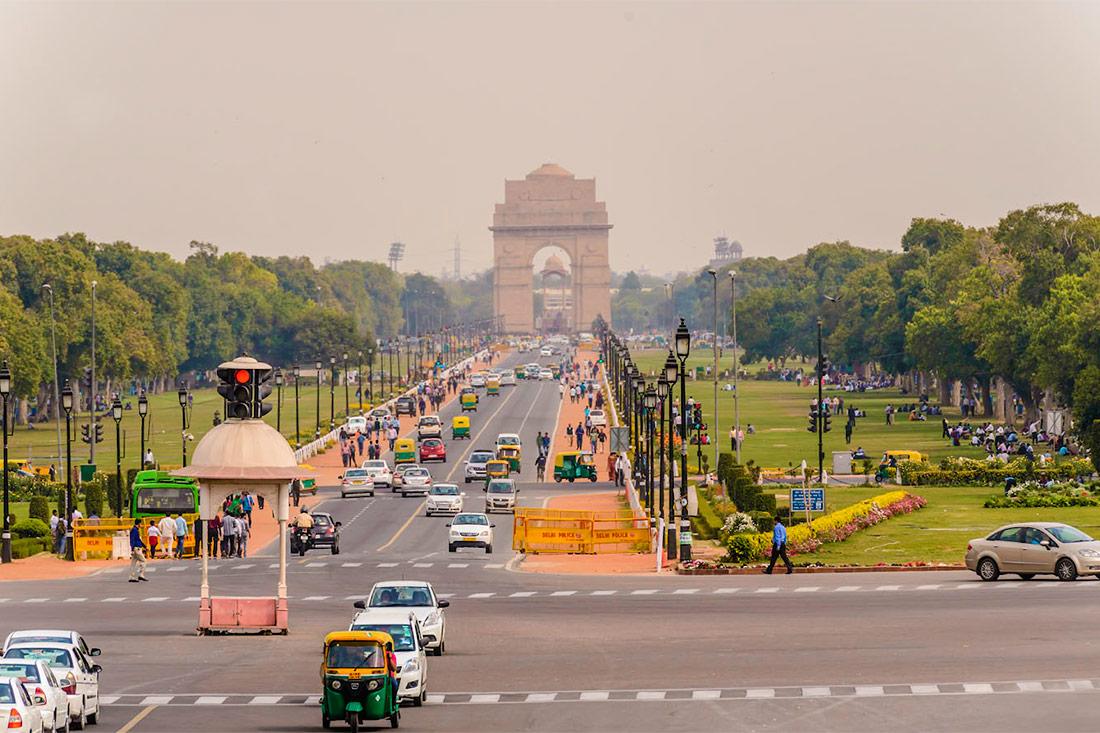
In translation, Rajpath means 'Royal Road.' This broad boulevard, which typically serves as one of the city's main vehicular routes, hosts the annual Republic Day parade on January 26.
Traffic stops, and the street fills with military vehicles and marching soldiers. This grand event attracts many tourists who plan to visit Delhi specifically to witness the procession. Rows of trees line Rajpath, and parks and pedestrian paths are developed to enhance this area.
Address: Rajpath, E Block, Central Secretariat, New Delhi, Delhi, India.
International Toilet Museum
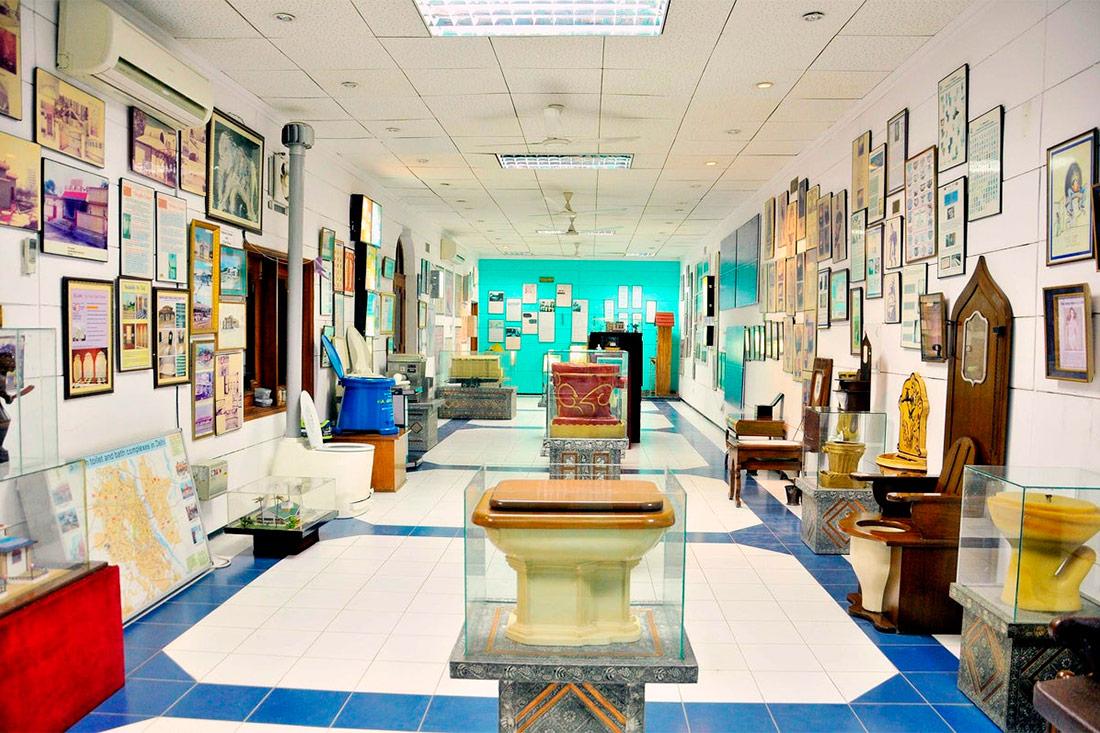
Since its opening in 1992, the Toilet Museum has welcomed over one hundred thousand tourists. Not all travelers are aware of this attraction, but it is worth a visit for those looking to see something unusual. The museum occupies one large room. The entire exhibit is dedicated to sanitary issues.
In India, the subject of toilets has long been problematic, with much of the population lacking access to proper facilities. A whole organization was even established to educate residents about the importance of hygiene practices.
The exhibits showcase the evolution of toilet systems from ancient times. Each item comes with a detailed description. Among the most interesting items are a toilet for astronauts, an ancient Egyptian toilet, and even a royal toilet inlaid with precious stones. Here, you can also find a replica of the throne of French Emperor Louis XIII, which was equipped with a toilet. The monarch used this throne during court sessions without interrupting the proceedings, even when he needed to answer nature's call.
Address: Sulabh International Museum Of Toilets, Palam - Dabri Marg, Kali Nagar, Block R, Mahavir Enclave Part 1, Mahavir Enclave, New Delhi, Delhi, India.
Chandni Chowk - A Colorful Trading District
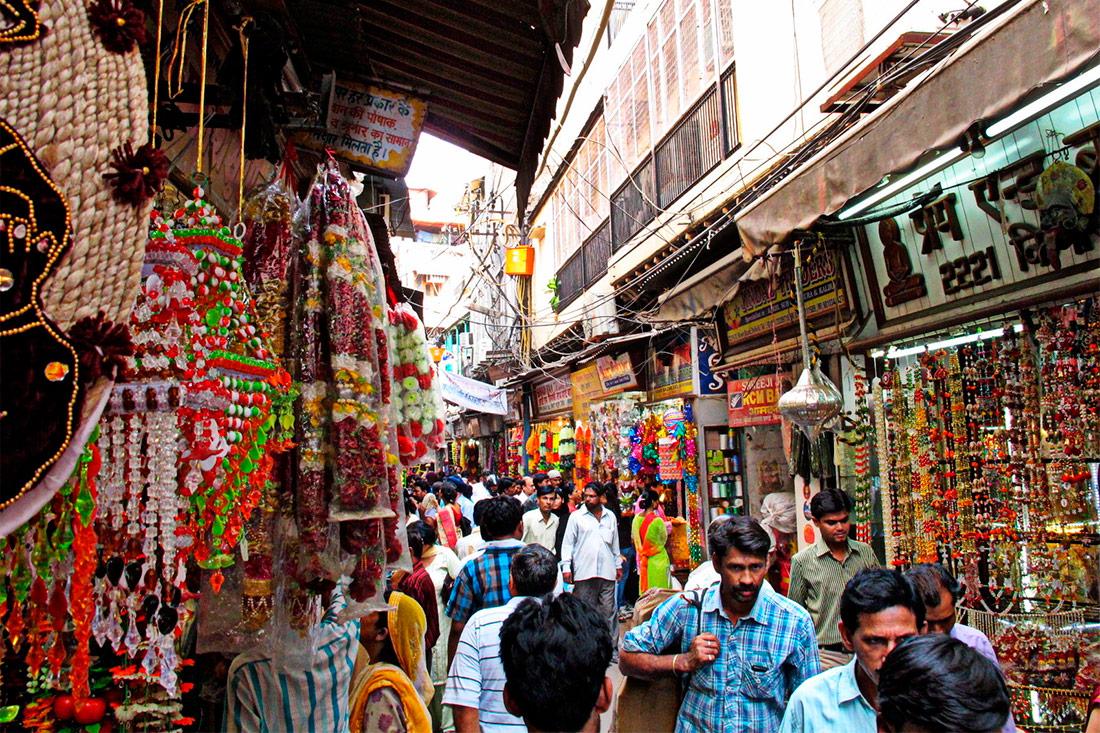
A bustling market occupies an entire street. Trade here has been ongoing for several centuries. The bazaar is constantly expanding and adding new trader points. You can find almost any item from spices to expensive jewelry. The market was established during the reign of Shah Jahan.
According to legend, he decided to organize trading points here for his beloved daughter so she would have no reason to feel bored and could buy anything her heart desired. The market was originally divided into sections by waterways. Today, they are closed, but the thematic quarters' segregation remains.
The Chandni Chowk District is not only home to the market; it also attracts pilgrims, as it includes numerous mosques and temples of various religions. Visitors often notice that they seem to dissolve into the extraordinary atmosphere here, becoming part of the ongoing actions around them.
Address: Chandni Chowk, New Delhi, Delhi, India.
Planetarium in Delhi
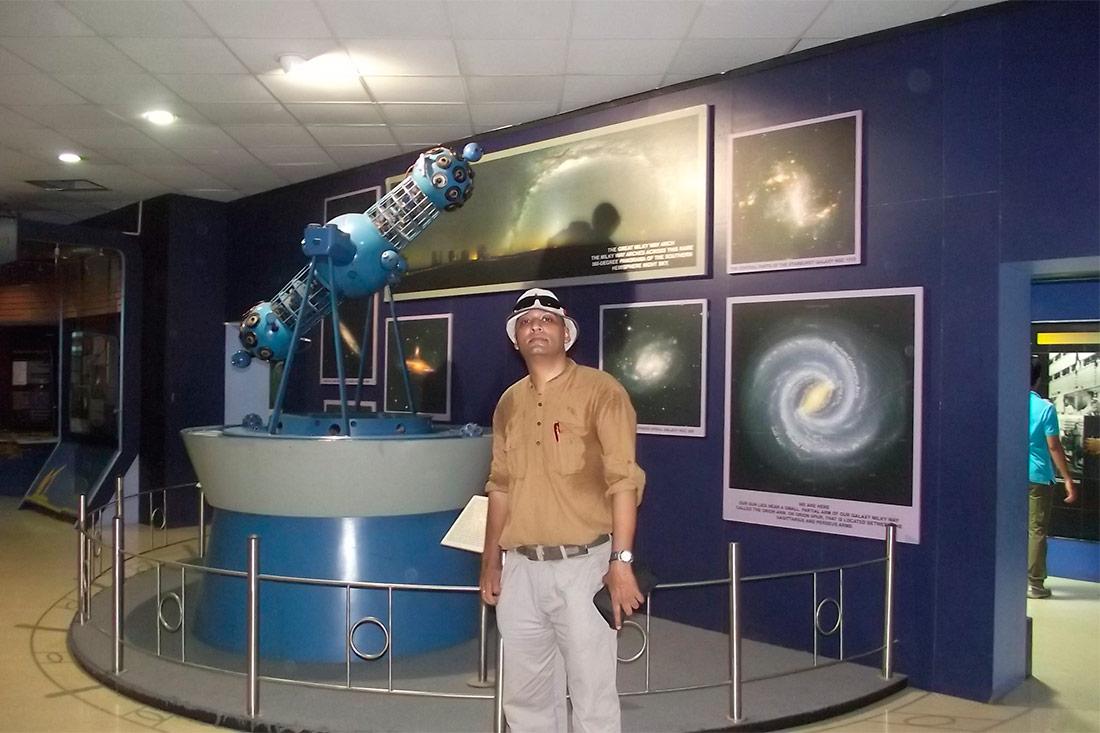
The planetarium is named after Jawaharlal Nehru; the museum building was once the residence of the first Prime Minister. Consequently, a special exhibition is dedicated to Nehru himself, featuring numerous photos, correspondences, manuscripts, and personal belongings.
The establishment of the planetarium was due to Nehru's serious interest in astronomy. The museum's main exhibit is a section of the spacecraft in which India's first astronaut returned to Earth. It also houses the onboard diary and the spacesuit of this national hero.
Visitors are thrilled by the presentations organized at the Sky Theater, located in the planetarium. Using a star projector with a unique optical system, viewers can see two million stars. Furthermore, the planetarium features old telescopes, projectors, and solar filters for observing eclipses.
Address: Nehru Planetarium Delhi, Teen Murti Marg, Teen Murti Marg Area, New Delhi, Delhi, India.
Connaught Place - A Modern Area of Delhi
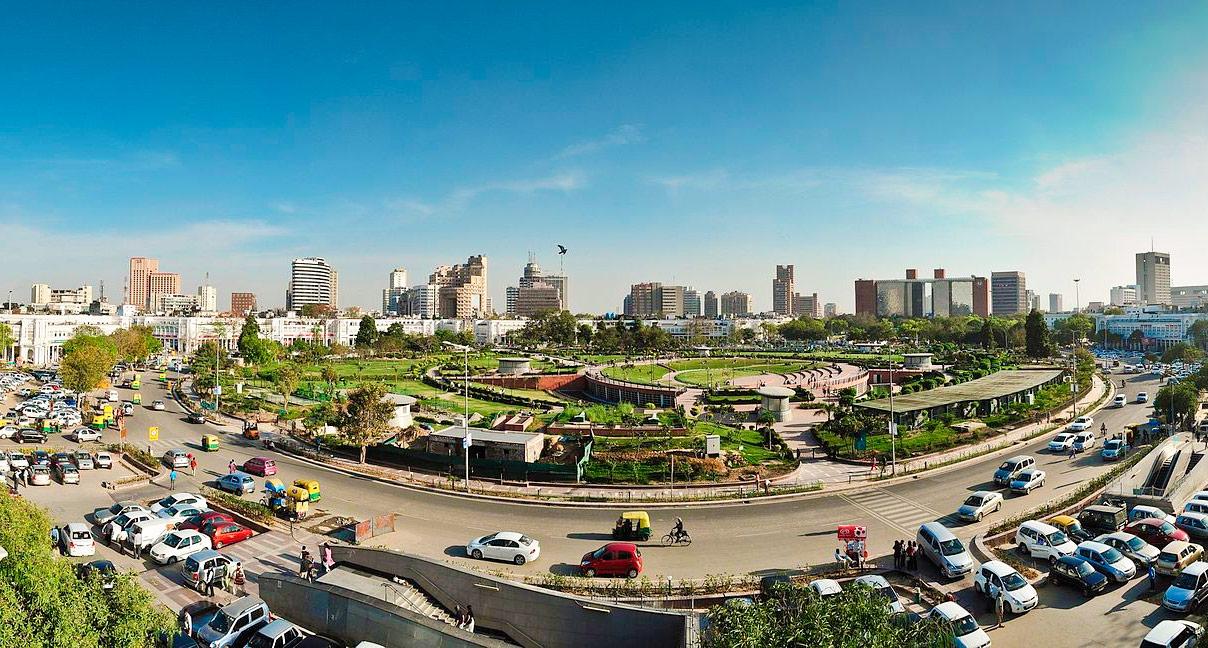
Connaught Place serves as Delhi's financial, business, and shopping center. It contains numerous boutiques, commercial and entertainment complexes, and office buildings. This area is often referred to as a true shopping paradise.
According to the developer's plans, the quarter was supposed to be shaped like a horseshoe, but during construction, a closed circle emerged, which is now known as Connaught Place. Roads radiate from here in all directions. Architects were inspired by European styles, predominantly utilizing Victorian style.
However, the spirit of India is evident throughout: this area is constantly filled with crowds, and traffic jams are common, as the people of Delhi have added a touch of chaos to the neat layout.
Address: Connaught Place, New Delhi, Delhi, India.
Delhi is unique in many ways. It is the only place where temples of all the most known religions coexist. Luxurious, fashionable villas sharply contrast with impoverished slums. The stunning beauty of central plazas can abruptly turn into the broken roads of ancient alleys. Delhi captivates and astonishes. The city possesses a completely unparalleled energy that you can completely immerse yourself in.